
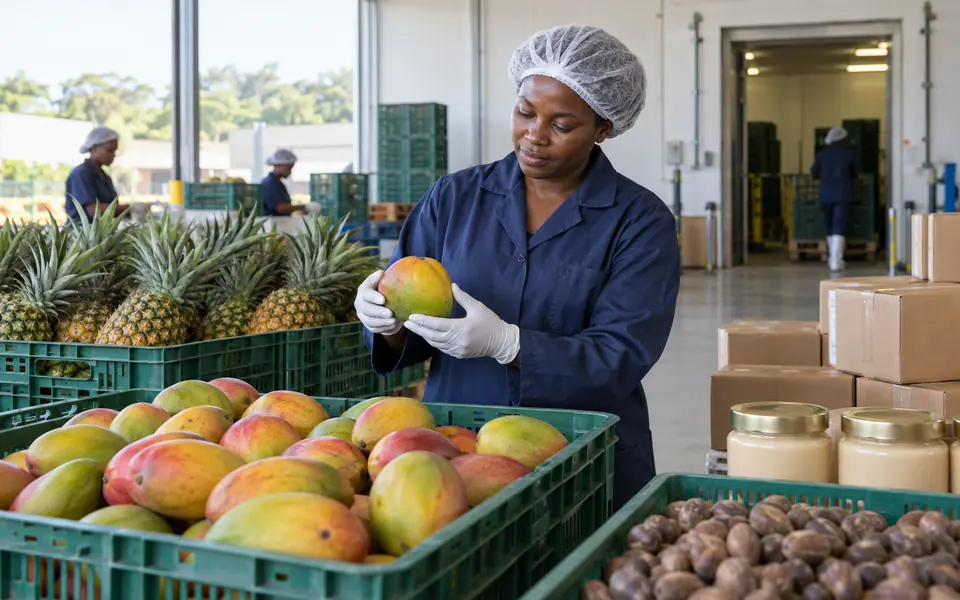
Shea butter is one of Ghana's clearest non-traditional export success stories; a sector estimated to support income for millions of rural women across the country, and one where global demand consistently outpaces what's currently certified and export-ready. If you're producing shea butter, cosmetics, or another natural non-traditional export, here's what actually determines whether your product reaches international shelves.
Why does certification matter more than the product itself?
International buyers of shea butter and similar natural ingredients; particularly cosmetics labs and brands in Europe; work with exporters they can trust for consistent quality and traceability. In practice, that trust is expressed through paperwork: certificates of analysis, organic certificates, and safety data sheets are now standard requirements before an importer will commit to a supply relationship. A real and telling example from Ghana's shea sector: exporters were unable to grow sales into Turkey specifically because Ghana's standards authority could not, at the time, issue the organic and origin certificates Turkish customs required; even though buyer demand was there and growing. Good product without the matching certificate simply doesn't clear.
What certifications does shea butter (or a shea-based cosmetic product) typically need?
- Ghana Standards Authority (GSA) certification; confirms your product meets Ghana's national standard for cosmetic products and relevant quality benchmarks.
- Food and Drugs Authority (FDA) registration; required for cosmetics and personal care products sold or exported from Ghana, alongside GSA where applicable.
- Certificate of analysis; a lab-verified breakdown of your product's composition, increasingly requested as standard by international buyers.
- Organic certification (e.g. through a recognised body such as ECOCERT); not mandatory everywhere, but often the difference between a standard sale and a premium one, especially in the European market.
- Safety data sheets; technical documentation on the product's composition and safe handling, expected by most serious international buyers before they'll finalise an order.
- Certificate of Origin; confirms your product genuinely originates from Ghana, required for customs clearance at the destination and for any preferential tariff treatment your buyer may be claiming.
Which combination you need depends entirely on your destination market; a buyer in Saudi Arabia, the EU, or under AfCFTA to a fellow African state can each have a different documentation checklist, so it's worth confirming requirements with your specific buyer or market before committing to a shipment.
How should shea butter and similar products be packaged for export?
Shea butter and other natural cosmetic ingredients are especially sensitive to how they're packaged for the journey:
- Sealed, food-grade or cosmetic-grade containers; buckets, tins, or drums that won't leach into the product or let moisture in.
- Secondary packaging; an outer carton or crate around the primary container protects against impact and temperature swings, especially over a multi-week sea voyage.
- Temperature awareness; shea butter is sensitive to heat; where the route or season makes extreme temperatures likely, factor this into your choice of shipping mode and timing.
- Clear labelling; batch numbers, production dates, and net weight should be legible and durable, both for your buyer's own compliance records and for customs at the destination.
- Consistent unit sizes; standardising your container sizes (a specific drum or tin size, for example) speeds up loading, customs assessment, and your buyer's own inventory handling.
Sea freight or air freight for shea butter exports?
Shea butter is heavy relative to its per-kilogram export value compared to something like electronics, which generally makes sea freight the more economical choice for established, ongoing export volumes; particularly FCL once your order sizes justify a full container, or LCL – Cargo Groupage while you're building toward that volume. Air freight becomes worth considering for smaller sample shipments to a prospective new buyer, or genuinely time-sensitive orders where the buyer needs stock faster than a multi-week sea voyage allows.
What other non-traditional Ghanaian exports face similar certification requirements?
The certification pattern for shea butter is common across Ghana's broader non-traditional export basket:
- Processed foods and spices; FDA registration, and a Phytosanitary Certificate for many agricultural-derived products
- Cocoa-derived products, cashew, and coffee; quality and fumigation certification through COCOBOD
- Handicrafts; generally lighter on regulatory certification, but still subject to standard export documentation and, for certain wood-based crafts, Forestry Commission permits
- Other cosmetic ingredients; coconut oil, black soap, baobab oil, and neem oil face similar GSA/FDA requirements to shea butter